Quick take
- Effort and stretch are fine. Sharp pain, numbness, tingling or dizziness mean stop.
- If you have a medical condition, recent surgery, an injury or are pregnant, ask your doctor or physical therapist which movements suit you.
- This page is general guidance. It cannot replace advice from someone who knows your health.
Ground rules for every session
Know effort from pain
Working muscles shake, burn a little and get tired. Stretched muscles pull. Those are normal. Pain that is sharp, pinching, located in a joint, or that travels down a limb is a different signal. Back out of the pose straight away.
Stay in your comfortable range
Work at roughly 60 to 70 percent of your maximum stretch. You should be able to hold the pose for several breaths without gritting your teeth. Your range changes day to day, so let today's body decide, not last week's.
Never force a joint
Do not use your hands, a strap or body weight to lever a joint past where it wants to go, especially knees, neck and lower back. A knee that will not go flat in Butterfly Pose should be supported with a cushion, not pressed down.
Keep breathing
Holding your breath is usually a sign you are pushing too hard. Slow, steady breathing through the nose is a good built-in gauge. If you cannot breathe easily, ease off.
Warm up, then slow down
Start each session with a few minutes of easy movement, such as Cat-Cow or slow marching on the spot, before longer holds. End with a few minutes of rest so your heart rate and breathing can settle, and roll to your side before you sit up. Standing up quickly after lying down can make some people lightheaded, especially if they take blood pressure medication.
Start small
Begin with sessions of 10 to 15 minutes and add time once you know how your body responds the next day. Most problems at home come from doing too much too soon, such as a long session after months of no exercise.
Set up a safe space
Use a non-slip mat or practice barefoot on a rug that does not slide. Clear furniture with sharp corners away from where you might lose balance. Keep a chair or wall close for standing poses.
For specific swaps for knees, wrists, back and balance, see Props & Modifications.
Who should check with a professional first
Gentle yoga suits most adults, but it is worth asking your doctor, physical therapist or specialist before starting if any of these apply:
- Heart disease, uncontrolled high blood pressure, or a history of stroke or fainting
- Glaucoma, a detached retina, or recent eye surgery
- Osteoporosis or low bone density
- A joint replacement, or surgery in the past few months
- Pregnancy, especially if you have complications
- A disc problem, spinal condition, or back pain with leg symptoms
- Recent injury, or pain you have not had diagnosed
- Balance problems, recent falls, or a neurological condition
- Hypermobility or a connective tissue condition
Tell them which poses you plan to do. Bringing a printout of a routine such as Chair Yoga or Lower Back Relief makes the conversation specific and useful.
Pregnancy
Many people practice yoga through pregnancy, and gentle movement is generally encouraged for uncomplicated pregnancies. Your body changes week to week, though, so get the go-ahead from your midwife or doctor and consider a class or online program led by a qualified prenatal yoga teacher.
General points that apply to most pregnancies:
- Avoid lying on your belly, and avoid deep twists that compress the belly. Twist gently from the upper back instead.
- After the first trimester, limit time lying flat on your back. Rest on your side with cushions instead of in Corpse Pose.
- Hormones loosen ligaments, so stretch less deeply than usual and favor stability.
- Skip breath holds and keep breathing smooth (see breathing cautions).
- Avoid getting overheated and stay hydrated.
Stop and contact your care provider if you have bleeding, fluid leaking, contractions, chest pain, dizziness, calf pain or swelling, or a headache that will not go away.
High blood pressure and glaucoma
Poses that put your head below your heart briefly raise pressure in the head and eyes. For most people this is harmless. If you have glaucoma, uncontrolled high blood pressure, or a history of retinal problems, ask your doctor before doing them.
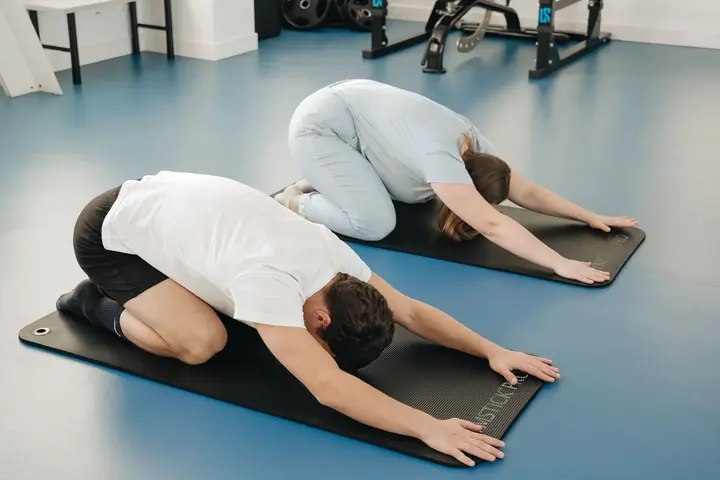
Head-down or legs-up poses on this site include Downward Dog, Standing Forward Fold, Puppy Pose, Child's Pose with the head low, and Legs Up the Wall.
| Instead of | Try |
|---|---|
| Downward Dog | Hands on a wall or chair seat, hips at shoulder height |
| Standing Forward Fold | Halfway Lift with hands on a chair |
| Child's Pose | Child's Pose with your forehead on stacked cushions so the head stays above the hips |
| Legs Up the Wall | Corpse Pose with a cushion under the knees |
Avoid breath holds and straining if your blood pressure is high, and come up slowly from any forward bend. If your blood pressure is well controlled, your doctor may be happy for you to do these poses normally.
Osteoporosis, joints and surgery
Osteoporosis and low bone density
With fragile bones, the movements most often linked to spine fractures are deep forward rounding under load and twisting to the end of your range. Rounding to touch your toes, rolling up from lying with a curved spine, and cranking into a twist with your arms all fall into this group.
- Keep your spine long in forward bends: hinge from the hips with a flat back, as in Halfway Lift, and skip deep rounded folds such as Seated Forward Fold.
- Twist only partway, without pulling yourself further with your hands. Seated Twist and Supine Twist should stay small.
- Skip Boat Pose and crunch-like moves. Bird Dog and Locust Pose strengthen the back in a safer shape.
- Prioritize balance and standing strength: Tree Pose by a wall, Warrior Two and Chair Pose.
Joint replacement
After a hip or knee replacement, your surgeon or physical therapist will give you movement limits, sometimes for months or permanently. Hip replacements often come with limits on deep hip bending, crossing the leg over the midline, and turning the leg inward or outward, which affects poses like Pigeon Pose, Figure Four and Happy Baby. Follow the limits you were given, and show them a list of poses before you start.
Recent surgery
Wait until you are cleared for exercise, and ask specifically about stretching, lying on the belly and lifting your own body weight. Abdominal surgery and spinal surgery in particular have restrictions that last longer than the scar takes to heal.
Wrists, knees and neck
- Wrists: spread the weight across your whole hand, use fists or forearms, and limit time in Plank Pose and Downward Dog if they ache.
- Knees: pad them when kneeling, keep the knee in line with your toes, and never twist the knee to get your foot into place.
- Neck: keep the neck long and in line with your spine. Avoid putting weight on your head or neck, and do not crank the head back in backbends. Move slowly in neck stretches and keep them small.
Red flags: stop now
Chest pain, pressure spreading to the arm, jaw or back, sudden weakness on one side, slurred speech, or a sudden severe headache are emergencies. Call your local emergency number.
For anything else on the list that does not settle within a few minutes of rest, or that happens again in a later session, get it checked before you continue. The same applies to pain that lingers more than a day or two after practice or gets worse over a week.
Mild muscle soreness the day after a new routine is normal and usually fades within 48 hours. Keep moving gently while it does.